
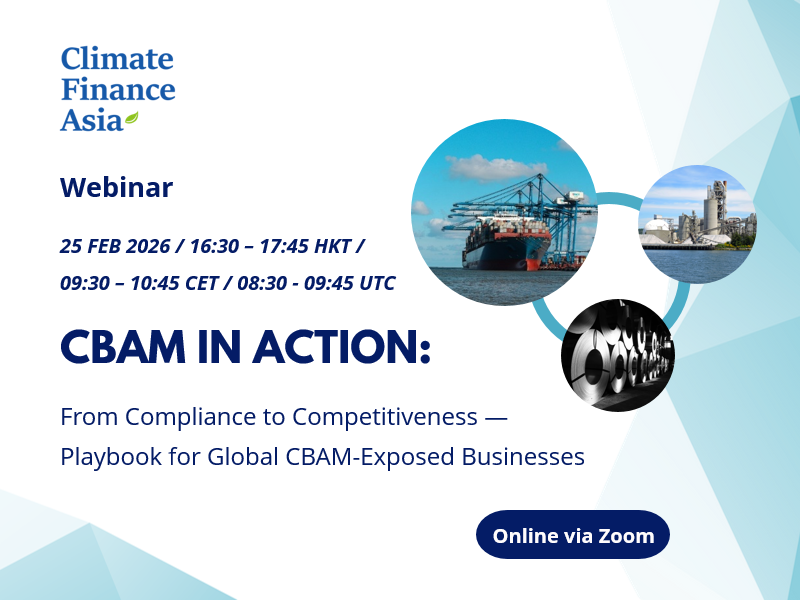
Available Here (Full webinar video link and report)
Date: 25 February, 2026 (Wednesday)
Time: 16:30 – 17:45 HKT | 09:30 – 10:45 CET | 08:30 – 09:45 UTC
Format: Online via Zoom
Purpose
This webinar will examine how businesses are responding to the European Union’s Carbon Border Adjustment Mechanism (CBAM) and other border carbon measures, as well as how these developments are shaping competitiveness in global markets when strategic planning becomes implementation reality.
Drawing on insights from a recently published WEF–CFA white paper, the session will first provide a concise overview of the global evolution of border carbon measures and their economic and environmental implications, before exploring how companies at different stages of readiness can translate emerging trade policies and requirements into practical actions they can begin taking today.
Using a strategy playbook build on the “PACE” framework, the discussion will focus on how companies are preparing and organizing across functions and stakeholders to respond to CBAM, including:
- Understanding and managing CBAM/BCA exposure
- Strengthening MRV and carbon data readiness
- Aligning transition strategy, investment, and financing considerations
- Engaging supply chains and procurement functions in decarbonization efforts
Who Should Attend
This webinar is designed for senior leaders and practitioners involved in navigating carbon-related trade and regulatory developments, particularly those with exposure to international markets.
- Global CBAM-exposed exporters and manufacturers (large and mid-sized)
- Corporate leaders and teams across executive management, strategy, sustainability, supply chain, procurement, compliance, operations, and product development
- Government and public-sector agencies involved in trade, industry, climate, and competitiveness policy
- Financial institutions, including banks, investors, and participants in commodity and trade finance markets
- Multilateral and international organizations working on trade, climate policy, and carbon markets
- Industry bodies, chambers, and sector alliances, including decarbonization-focused coalitions supporting companies on trade, regulatory, and competitiveness issues
Programme
Opening Remarks
- Chanyau Chong, MBE, Co-founder and Vice Chairman, Climate Finance Asia
Keynote Speech – Why BCAs Now?
- William Jernigan, Climate Strategy Lead, World Economic Forum
Context-Setting – Global Evolution of Border Carbon Measures (BCAs) and Trade Implications
- Dr. Farhad Taghizadeh-Hesary, Chief Economist, Climate Finance Asia
Presentation – Playbook and the PACE Strategy
- Donald Eubank, Senior Consultant, Climate Finance Asia
Fireside Chat – Case Study Sharing on Actual Implementations
- Dr. Gopal Sarangi, Head of Department of Policy and Management Studies, TERI School of Advanced Studies; Research Lead in India (UltraTech Cement’s case)
Host:
- Toby Cheng, Manager, Sustainable Finance Analysis, Climate Finance Asia
Panel Discussions – Competitiveness under CBAM: Translating Strategy into Action
Panellists:
- William Jernigan
- Donald Eubank
- Dr. Gopal Sarangi
Moderator:
- Dr. Farhad Taghizadeh-Hesary
Q&A from the audience
Speakers and Panellists (in order of appearance)
 |
Chanyau Chong
MBE, Co-founder and Vice Chairman, Climate Finance Asia Chanyau Chong also co-founded CarbonCare InnoLab (CCIL) in 2014 and previously served as Executive Director of Oxfam Hong Kong and on the Board of Oxfam International. A former Hong Kong Government officer and President of the Hong Kong Blind Union, he brings decades of leadership in sustainability and social inclusion. He was awarded an MBE and named one of Hong Kong’s Ten Outstanding Young Persons as well as “Leaders of 2011” for his public service. |
 |
William Jernigan
Lead, Climate Strategy, World Economic Forum William Jernigan is a Lead in the Climate Strategy team at the World Economic Forum in Geneva, where he works on the intersection of climate policy, competitiveness and industrial decarbonization. He served as the Forum’s lead author for the “Climate and Competitiveness: Border Carbon Adjustments in Action” report, developed in collaboration with Climate Finance Asia, and his portfolio spans border carbon adjustments, carbon markets and climate finance. Prior to joining the Forum, William held roles across the United Nations system, focusing on climate mitigation, adaptation, resilience and financing in emerging economies. He holds an MSc from the University of Oxford and a BA from the University of San Diego. |
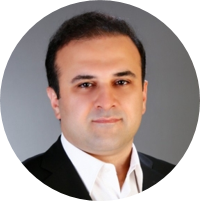 |
Dr. Farhad Taghizadeh-Hesary
Chief Economist, Climate Finance Asia Dr. Farhad Taghizadeh-Hesary is a globally recognized expert in energy economics, green finance, and policy. Listed among Clarivate’s Highly Cited Researchers (top 0.1% globally), he received Japan’s Minister of Education Medal and Commendation for Science and Technology in 2023 in recognition of his contributions to renewable energy financing research. His work focuses on sustainability, energy, and finance, and he serves as Editor-in-Chief of the Journal of Environmental Assessment Policy and Management. He also advises governments and financial institutions across Asia. |
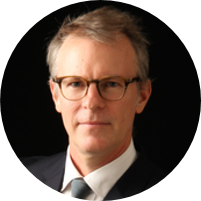 |
Donald Eubank
Senior Advisor, Sustainable Finance and Policy, Climate Finance Asia Donald Eubank is a sustainability strategist who focuses on the intersection between environmental and social risks and opportunities in investing and corporate strategies. At Climate Finance Asia, Donald has been acting as the lead of the Facility-level Just Transition Working Group, in which he developed the Facility-Level Just Transition Guidelines for banks that are financing coal phaseout projects, and co-author for the WEF White Paper “Climate and Competitiveness: Border Carbon Adjustments in Action”. As cofounder of advisory firm Read the Air, Donald has also been a key partner for organizations that seek to create corporate value by developing sustainable business and decarbonization strategies. He is a co-author of “Leading Sustainably—The Path to Sustainable Business and How the SDGs Changed Everything” (Routledge) and a contributor to “The Handbook of Climate Change Leadership in Organisations”. |
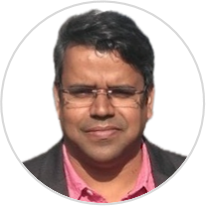 |
Dr. Gopal Sarangi
Head of Department of Policy and Management Studies, TERI School of Advanced Studies; Research Lead in India (UltraTech Cement’s case) Dr. Gopal K Sarangi is an Associate Professor and Head of the Department (HoD) of the Department of Policy and Management Studies (DoPMS), at TERI SAS with more than 20 years of research and consulting experience. His primary domain of research covers energy market and regulation, green finance, carbon market, industrial decarbonisation and ESG issues and public policy issues of energy and climate change. He has contributed as PI, Co-PI, Advisor and team member to several collaborative projects funded by DFID, EPSRC, World Bank, British Academy, UNDP, Prosper.Net, ICIMOD, Norwegian Research Council (NRC) and Government of India (GoI). He has contributed to the energy and climate policy making of India as an invited member of many Committees formed by Government of India. To his credit, he has been chosen as an Independent Director of UGVCL, Gujarat – one of the most efficient and pioneer distribution utilities of the state. He has visited Freie University, Berlin, Germany, as a DAAD Research Fellow, visited DMU, UK as a Project Research Fellow, and visited Dundee University, Scotland as a Project Research Fellow, and visited UTS, Sydney, Australia as a Key Technology Partnership (KTP) research fellow. He has published widely in high-ranking journals. |
 |
Toby Cheng
Manager, Sustainable Finance Analysis, Climate Finance Asia Toby Cheng has over a decade of experience in ESG and sustainable finance advisory. He has led projects in corporate sustainability strategy and disclosure, environmental policies and assessments, green finance and performance verification for leading listed companies, financial institutions, and regulators. A GRI-trained practitioner with an MPhil from the University of Hong Kong, he focuses on data-driven ESG evaluation and corporate decarbonization. |
Available Here (Full webinar video link and report)